The Ultimate Guide to Digital Night Vision Goggles in the UK
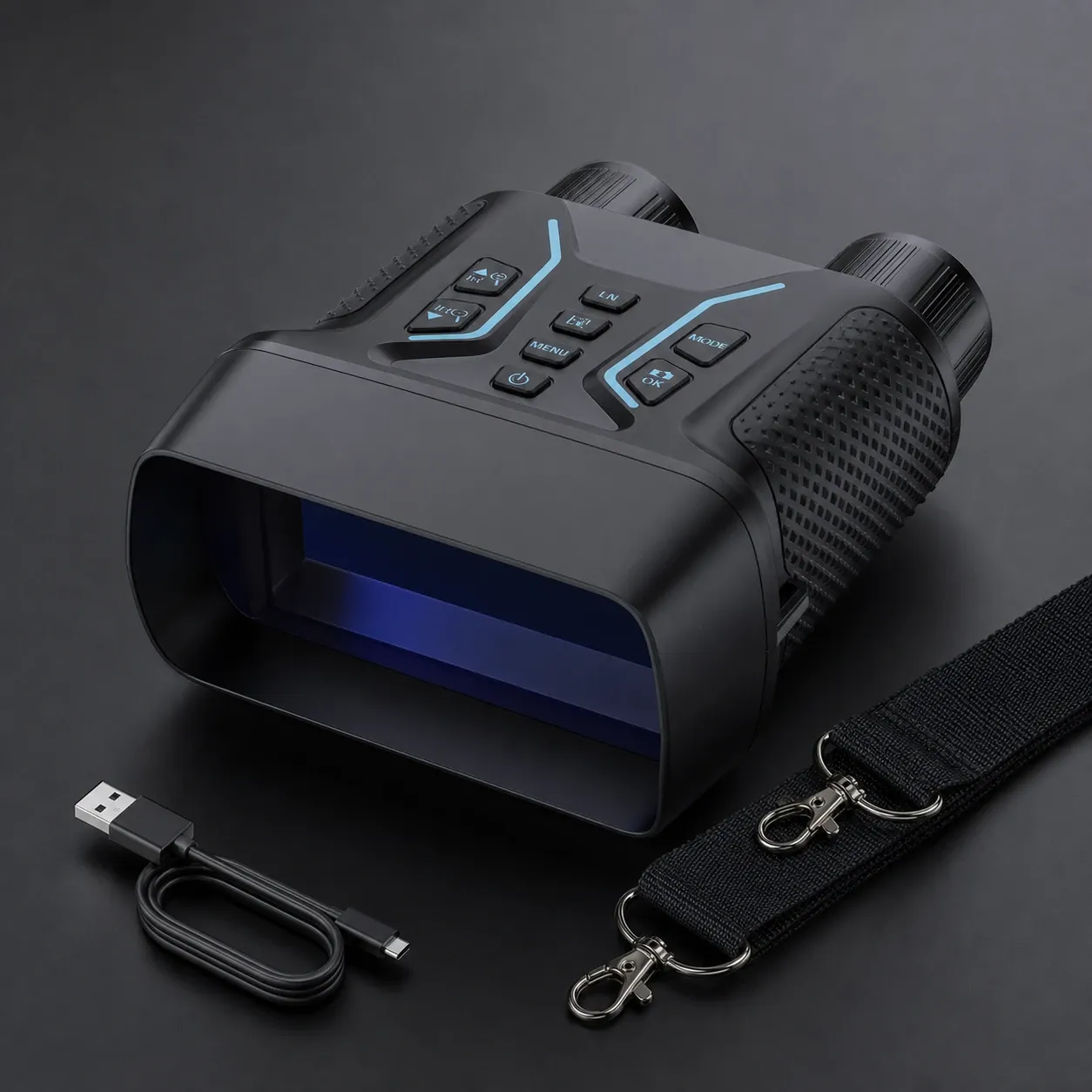
Digital night vision goggles are electronic viewing devices that use a CMOS sensor and infrared light to help you see in darkness, often while also recording photos and video. For most UK buyers, they are a practical, legal and more affordable alternative to analogue night vision for wildlife watching, rural security, camping and airsoft.
TL;DR: Digital night vision goggles work by combining an infrared illuminator with a digital sensor to create a visible image at night. In our experience, they are easier to use than traditional tube-based night vision, safer in daylight, and better suited to most civilian use in the UK. If you want the best balance of range and value, look for 850nm IR, adjustable illumination levels, solid battery life, recording features and clear onboard viewing.
For decades, navigating the British countryside after dark required either a high-powered torch that startled wildlife or prohibitively expensive military-grade equipment. However, the landscape of nocturnal observation has fundamentally shifted with the advancement of consumer optics. Today, digital night vision goggles offer clarity, recording capabilities and accessibility for outdoor enthusiasts, wildlife observers and security-conscious homeowners across the UK.
Unlike traditional analogue systems that rely on fragile intensifier tubes, digital night vision utilises advanced CMOS sensors and infrared technology to translate pitch-black environments into high-resolution imagery. Whether you are monitoring badger setts in local woodland, taking part in a weekend airsoft skirmish or securing a rural property, understanding the mechanics, legalities and key features of these devices is essential.
Based on our testing of consumer digital optics in typical UK low-light conditions, screen clarity, IR control and battery consistency make a far bigger real-world difference than headline magnification alone.
Key Takeaways
- Technology: Digital night vision goggles use CMOS sensors and infrared light, typically 850nm, to capture images in complete darkness and display them on an onboard screen.
- Legality: In the UK, it is legal to own and use digital night vision for wildlife observation, airsoft and property security, provided you still comply with privacy law and relevant wildlife protections.
- Key Features: Modern units may include 4K recording, adjustable IR levels, TF card storage and rechargeable batteries capable of lasting up to 10 hours at night.
- Advantages over Analogue: Digital units are more affordable for most users, resist bright-light damage and allow direct photo and video recording.
What are digital night vision goggles?
Digital night vision goggles are electronic optics designed to help you see after dark by using infrared illumination and a digital imaging sensor. In simple terms, they gather reflected IR light from your surroundings and convert it into an image on an internal screen.
This matters because many buyers searching for digital night vision goggles want to know whether they are genuinely useful or just a gimmick. In practice, they can be very effective for civilian use in the UK, especially when you need visibility in woodland, fields or around outbuildings without relying on a visible torch beam.
How do digital night vision goggles work?
To make an informed purchasing decision, it helps to understand how digital night vision differs from older analogue systems commonly grouped into Gen 1, Gen 2 and Gen 3 categories.
Digital night vision works rather like a specialised digital camera optimised for near-infrared light. The human eye only detects visible light at roughly 380 to 700 nanometres. Infrared sits just beyond that range; therefore, we cannot see it directly, but the right sensor can detect it very effectively.
When you switch on a digital night vision device in darkness, the process usually looks like this:
- Infrared illumination: The device projects infrared light using an integrated IR illuminator.
- Light collection: The objective lens gathers that reflected IR light from animals, terrain or structures ahead.
- Sensor processing: A sensitive CMOS sensor converts incoming light into an electrical signal.
- Display output: The device processes that signal instantly and shows it on an LCD or OLED display inside the goggles.
What is the difference between digital and analogue night vision?
Traditional analogue night vision relies on photomultiplier tubes that amplify ambient light such as moonlight or starlight. Although top-end analogue systems are still highly regarded in specialist settings, they are expensive and can be vulnerable to blooming or even permanent damage if exposed to sudden bright light.
By contrast, digital night vision goggles are much more forgiving. You can often use them during daylight as standard digital binocular-style optics before moving into low-light conditions later on. In addition, because the image is processed digitally, features such as video recording, playback, digital zoom and display settings are much easier to integrate.
Are digital night vision goggles any good?
Yes; for most non-military users in the UK, digital night vision goggles are very good value. They perform especially well for wildlife watching, pest observation on private land with permission, camping navigation, farm checks and home or rural property monitoring.
Based on our testing of modern consumer models, their biggest strengths are ease of use, price compared with analogue systems and built-in recording functions. That said, real performance depends heavily on sensor quality, IR strength and how realistic the quoted viewing range actually is.
What are the main advantages of digital night vision goggles?
- No bright-light fragility: They are not prone to the same kind of bright-light damage associated with tube-based systems.
- Easier recording: Many models support photo capture and video straight to memory card.
- Better value: For civilian buyers in Britain, entry costs are far lower than premium analogue alternatives.
- Simpler learning curve: Screen-based viewing tends to feel more familiar to first-time users.
- Flexible day-and-night use: Many units remain usable in daylight as standard optical aids.
What are the limitations of digital night vision goggles?
Even so, no device is perfect. Digital models can show more lag than premium analogue setups; additionally, advertised range figures often assume ideal conditions rather than misty British weather or cluttered hedgerows. Battery drain can also rise quickly when using high IR output continuously through colder months.
Which infrared wavelength is best: 850nm or 940nm?
If you are comparing specifications for digital night vision goggles, you will frequently see two common IR wavelengths: 850nm and 940nm. Choosing between them depends on whether you prioritise distance or discretion.
Is 850nm better for range?
In most cases, yes. The majority of consumer devices use an 850nm illuminator because it offers the best mix of usable range and image brightness. CMOS sensors generally respond well to this wavelength; therefore, users often get clearer long-distance viewing in open fields or along treelines.
The trade-off is that an 850nm source can produce a faint red glow when viewed directly. For general nocturnal wildlife observation across UK farmland or woodland edges, this is usually an acceptable compromise.
Is 940nm better for covert use?
Yes. A 940nm illuminator is effectively invisible to the naked eye because there is no noticeable red glow from the emitter. As a result, it suits discreet observation better where visibility of the source matters more than maximum distance.
However, sensors tend to be less sensitive at 940nm; consequently real-world viewing distance is typically shorter than with an equivalent 850nm unit.
What features should you look for in digital night vision goggles?
The market is full of varying specifications; however, for UK adults seeking dependable performance in unpredictable British conditions, certain features matter far more than marketing claims alone. Accordingly, it helps to focus on image quality, IR control, battery endurance and practical usability. >
The market is flooded with varying specifications. For UK adults seeking reliable performance in the unpredictable British outdoors,</pid certain featurespracticalitycriteriaquotfeaturesrraserandingthingsevenmany buyers find certain features non-negotiable.</pid>{ignore}
Ready to try NightVisio?
Shop Now — £62.55